
Smart contracts for financial infrastructure.
Issue assets, automate settlement, and enforce agreements on Liquid, a Bitcoin sidechain.
Contracts for real-world agreements.
A smaller, more predictable execution model for contracts that hold real value.

Native assets.
Issue assets directly on Liquid, with confidential amounts and asset types. Contracts constrain how those assets move, from transfer rules to settlement conditions.

Enforced by the contract.
Escrows, collateral, and staged payouts are enforced on-chain by the contract itself, reducing reliance on intermediaries to hold funds or honor terms.

Predictable execution.
Resource costs are bounded before a transaction is broadcast, and no other contract can interfere mid-execution. A transaction either satisfies the contract or fails without being included in the block.

Policy on chain.
Covenants can enforce whitelists, blacklists, and transfer limits on issued assets while holders keep custody, as demonstrated by the Decentralized Asset Management Protocol.
Financial infrastructure needs contracts whose behavior every stakeholder can review.
Simplicity is formally specified in Coq, and every contract’s resource use is bounded ahead of time. That makes contract behavior easier to review, audit, and explain.
 Give auditors and counterparties a precise, reviewable definition of how an instrument behaves.
- Build on Liquid, a Bitcoin sidechain with one-minute blocks, two-block finality, and native asset issuance.
| Traditional workflow | With Simplicity on Liquid |
|---|---|
 Slow settlement.Multi-party agreements often depend on reconciliation between separate systems, with settlement windows measured in days. |  Contract-enforced settlement.Settlement conditions are checked by the contract when funds move. Liquid produces a block every minute, and transactions are final after two confirmations. |
 Intermediaries hold the funds.Escrow agents and custodians hold assets while obligations are met, adding cost, delay, and counterparty risk. |  Funds locked by rules.Collateral and escrowed funds can only be spent under the agreed conditions, such as repayment, a timeout refund, or multi-party approval. |
 Fragmented records.Ownership of private assets is often tracked in separate registries, which makes transfers slow and collateral hard to reuse. |  Assets on a shared ledger.Issued assets live on Liquid, where they can be transferred, swapped, and posted as collateral at any hour. |
Use cases.
What contracts on Liquid can do for financial workflows:

Contract-based settlement.
Settle agreements in minutes rather than days, with collateral released only when the contract’s conditions are met.

Programmable custody.
Build custody policies around your governance model: multi-party approval, time delays, and recovery paths.
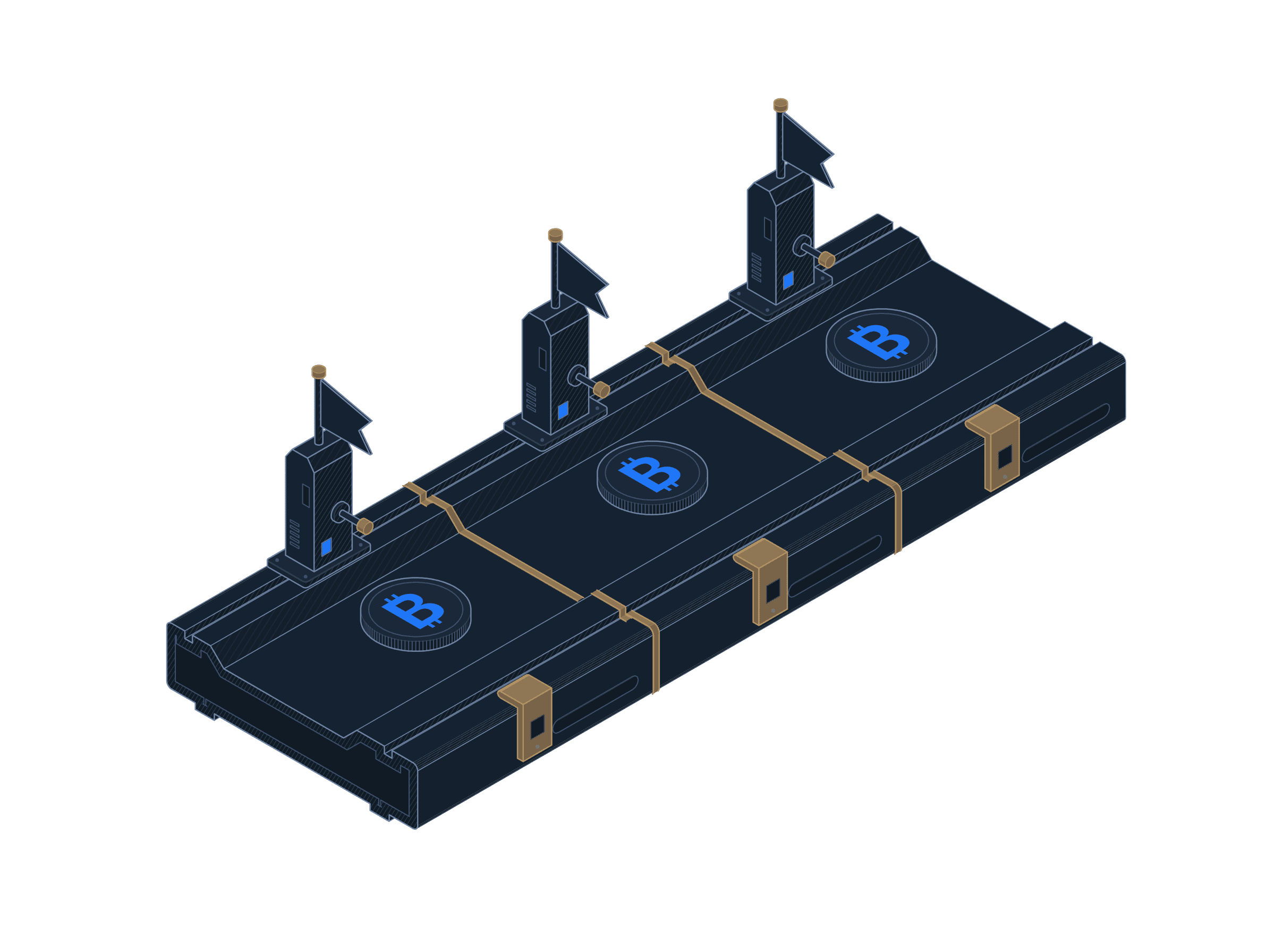
Staged payment escrows.
Automate staged payouts and conditional transfers, with refunds on timeout, reducing counterparty risk and manual oversight.
Trusted by industry professionals.













Build your next financial
application on Simplicity.
Talk to our team about how Simplicity can help you.